Five years ago, the idea of a computer-generated person racking up millions of followers sounded like science fiction. Then Lil Miquela started posting selfies, landing brand deals with Prada and Calvin Klein, and "dating" other digital characters — all while being entirely virtual. Today, building your own AI influencer is not a moonshot reserved for VFX studios. It is a weekend project.
A virtual persona never ages, never no-shows a shoot, never has a bad-hair day, and can post from Tokyo and Paris in the same afternoon. For creators, that means a scalable content engine. For brands, it means a mascot they own outright instead of renting an unpredictable human. That is why marketing teams, faceless-channel operators, and solo creators are all racing to launch synthetic personalities.
This guide walks you through the entire process end to end — from naming your character to shipping talking videos and earning your first dollar. No fluff, no theory. Just the workflow.
Want to skip straight to building one? Use ClipNova's AI Influencer Generator to create the persona, new photos with the same face and talking videos in one place.
Table of Contents
- What Is an AI Influencer (and Why Now)
- Step-by-Step: How to Create Your AI Influencer
- The Hard Part: Keeping Your Character Consistent
- Turning Stills Into Talking Videos
- Content Workflow and Posting Cadence
- How AI Influencers Make Money
- Ethics, Disclosure, and Platform Rules
- Your Launch Checklist
<a id="what-is-an-ai-influencer"></a>
What Is an AI Influencer (and Why Now)
An AI influencer is a fictional character — usually a photorealistic human, sometimes stylized — whose photos, videos, and voice are entirely generated. There is no person behind the face. A creator or team runs the account, writes the captions, and produces every image with generative tools. The audience follows the personality, the aesthetic, and the story, not a flesh-and-blood celebrity.
From CGI Studios to Solo Creators
The first wave of virtual influencers, like Lil Miquela and Imma, were built by well-funded studios using painstaking 3D rendering. Each post could cost thousands. That barrier collapsed. Diffusion models now produce photorealistic faces instantly, voice synthesis is indistinguishable from a real narrator, and lip-sync video tools turn a single portrait into a talking clip. The stack that once needed a studio now runs from your laptop.
Why Creators and Brands Are Building Them
The appeal is control and scale. A virtual persona is available 24/7, works in any language, and never has a scheduling conflict or a PR scandal you did not script. You own the likeness forever, so there is no contract renewal or licensing fee. And because the character is consistent, you can build a recognizable brand faster than a human creator who is constantly reinventing their look. For affiliate marketers and faceless channels, an AI influencer is the missing face that makes content feel personal.
<a id="step-step-create"></a><a id="step-by-step-create"></a>
Step-by-Step: How to Create Your AI Influencer
Here is the full build, broken into six stages. Do them in order — each one feeds the next.
<a id="step-1-persona"></a>
Step 1: Define the Persona, Niche, and Name
Before you generate a single image, write a character brief. This document is your north star and it prevents the aimless drift that kills most virtual accounts.
Nail down these attributes:
- Niche: fitness, travel, streetwear, beauty, tech, gaming, sustainable living. Pick one lane. A focused account grows faster and attracts relevant brand deals.
- Persona: age range, personality, backstory, hometown, values, quirks. Is she a sarcastic Berlin techno DJ or an earnest Colorado hiking guide? Specificity breeds engagement.
- Look: ethnicity, hair, build, signature style, color palette. Write it as a reusable prompt fragment you will paste into every generation.
- Name and handle: memorable, easy to spell, available across Instagram, TikTok, and YouTube. Check the handles before you fall in love with a name.
Treat this brief like a bible. Every future post should sound and look like it came from the same person.
<a id="step-2-design-face"></a>
Step 2: Design a Consistent Face and Look
This is where your character becomes real. Your goal is a locked-in face that looks identical in every future photo. The fastest path is a dedicated persona tool rather than fighting random prompts.
Use ClipNova's AI Character Generator to design the persona and save it to your character library. You define the look once, then reuse those saved portraits as reference images for every new photo and video, which solves the single most important technical hurdle in this entire project. Save your favorite reference portraits; they become the anchor for everything else.
If you want your character to feel like a real on-camera talent for ads and skits, upload a saved portrait to Talking Avatar, which animates that photo so it speaks your script.
<a id="step-3-generate-photos"></a>
Step 3: Generate Your Photo Library
One selfie is not a personality. You need a library — dozens of shots that make the account feel like a lived life.
Generate variety across:
- Settings: cafes, gyms, city streets, beaches, bedrooms, events.
- Outfits and seasons: keep the signature style but rotate the wardrobe.
- Angles and moods: candid, posed, close-up, full-body, laughing, focused.
- Content types: lifestyle shots, product-in-hand photos, behind-the-scenes.
Batch-produce twenty to thirty images before launch so you are never scrambling for tomorrow's post. Keep every keeper in an organized folder labeled by scene and outfit — that archive is your content bank.
<a id="step-4-voice-video"></a>
Step 4: Give Them a Voice and Talking Videos
Photos build a following; video builds a fanbase. To make your character speak, feed a portrait plus a script into a lip-sync tool. ClipNova's Talking Avatar turns a single photo and a script or voice track into a lip-synced talking video — the fastest way to give your influencer a real presence on Reels and TikTok.
Choose a voice that matches the persona brief — accent, pace, and energy all signal personality. Once you settle on a voice, keep it consistent forever; a changing voice breaks the illusion instantly. If the persona is voiced by a real person, voice cloning turns a short sample into a reusable voice. For a deeper walkthrough of the talking-head workflow, see our guide on how to make a talking avatar.
<a id="step-5-script-post"></a>
Step 5: Script and Post Content
Now you assemble posts. A single piece of content is usually a photo or short video, a caption in your character's voice, and relevant hashtags. Write captions in first person, in the persona's tone. Sarcasm, vulnerability, and strong opinions outperform bland description.
Plan content in themes: a "get ready with me" series, weekly niche tips, reaction takes on trends, or day-in-the-life sequences. Recurring formats train your audience to expect and return for something specific. Schedule posts in advance so your character maintains a steady, believable rhythm.
<a id="step-6-grow-monetize"></a>
Step 6: Grow and Monetize
Growth follows the same rules as any creator account: hook fast, post consistently, ride trends, and engage in the comments. Reply as the character to build parasocial connection. Once you have an engaged audience — even a few thousand true fans — you can turn attention into revenue through brand deals, affiliate links, and your own products. We cover the money in detail below.
<a id="character-consistency"></a>
The Hard Part: Keeping Your Character Consistent
Ask anyone who has built a virtual persona and they will tell you the same thing: consistency is the whole game. If your influencer's face subtly shifts every post — a different nose, new eye color, a rounder jaw — the audience feels it even if they cannot name it, and the account reads as fake in the wrong way.
Lock the Face First
Random text-to-image generation produces a new person every time, which is useless for a recurring character. The solution is a persona system that anchors to reference images. That is exactly what ClipNova's Consistent Character AI Video Generator gives you: upload your saved portraits once as references, then generate new scenes that all wear the same face. Always generate from your saved anchors rather than starting from scratch.
Keep a Style Bible
Beyond the face, lock the peripherals: hairstyle, signature accessories, color grading, and even caption voice. Store your reference portraits, your prompt fragments, and three or four example captions in one document. Every time you produce a post, check it against the bible. Consistency across the face, the vibe, and the voice is what converts a folder of images into a believable person.
<a id="stills-to-talking-videos"></a>
Turning Stills Into Talking Videos
Static images cap your reach. The platforms that grow fastest right now — TikTok, Reels, Shorts — are video-first, and video is where your character earns real trust. The AI Influencer Generator shows the whole path from one portrait to a talking clip.
The Photo-to-Video Pipeline
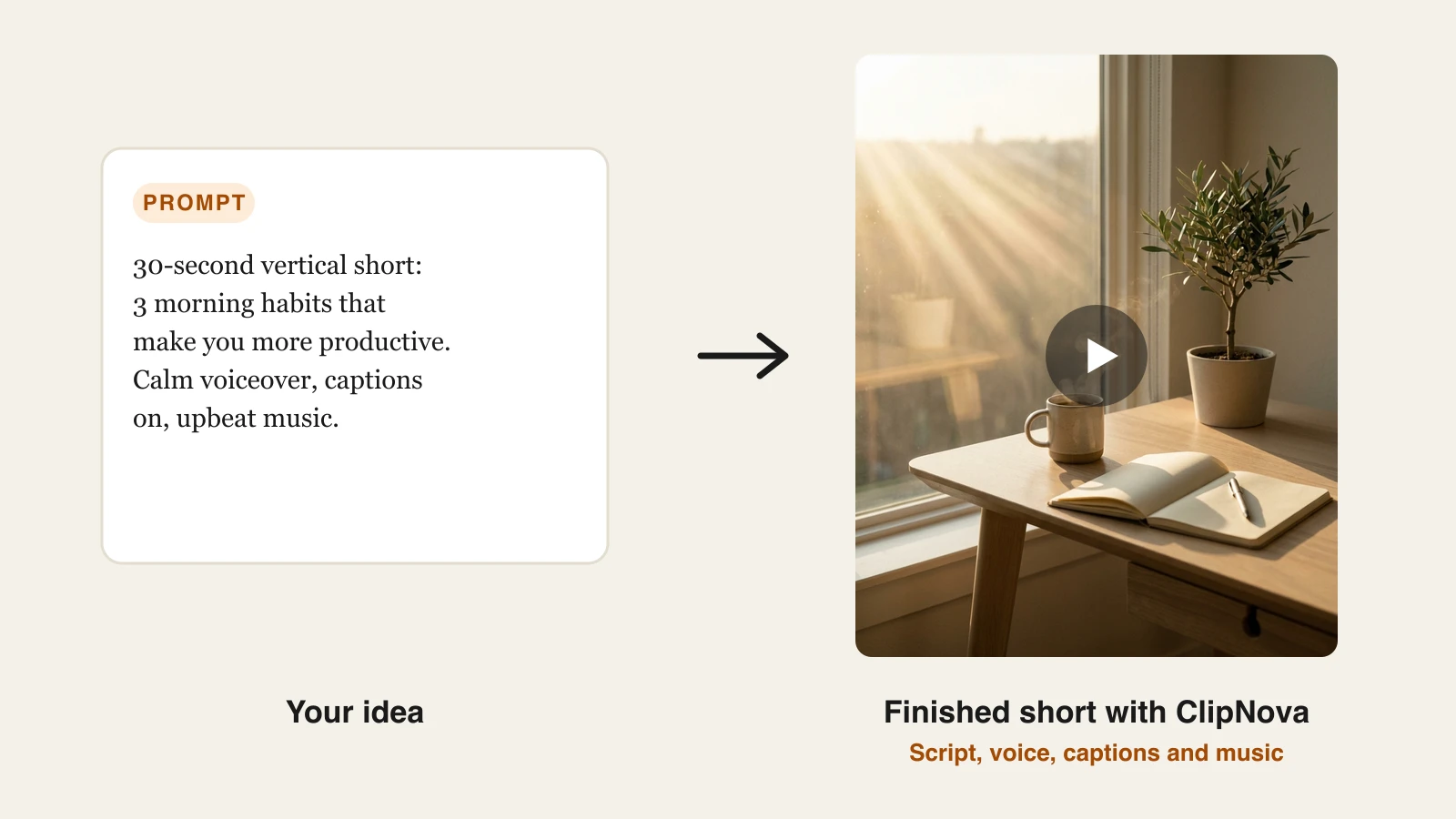
The workflow is simple: pick a strong portrait, write a short 15-to-30-second script, generate a matching voice, then run both through Talking Avatar to produce a lip-synced clip. Add captions, a trending audio bed where it fits, and a clean vertical crop. You now have a talking-head video without ever holding a camera.
UGC-Style Product Clips
When brand deals arrive, you will need authentic-looking product videos — the unboxing, the demo, the "I actually use this" testimonial. ClipNova's AI UGC Generator produces creator-style UGC clips that feel native to the feed, so your character can review a product convincingly. This format converts far better than a polished ad, which is why brands pay for it.
<a id="content-workflow"></a>
Content Workflow and Posting Cadence
Amateurs post when inspired. Operators post on a system. The difference shows up in the follower graph within a month.
Batch, Schedule, Repeat
Set aside one production block per week. In that session, generate your image batch, write a week of captions, produce two or three talking videos, and load everything into a scheduler. Batching keeps your character's look consistent within a run and frees the rest of your week for engagement and deals.
Cadence That Builds Momentum
Aim for one to two feed posts per day and several stories to stay top-of-mind, adjusting to the platform. Consistency matters more than volume — a reliable daily presence outperforms a burst followed by silence. Track which formats land, double down on winners, and quietly retire what flops.
<a id="monetization"></a>
How AI Influencers Make Money
A virtual influencer monetizes through the same channels as a human creator, often with better margins because there is no talent fee to pay out.
Brand Deals and Sponsorships
Once you have an engaged niche audience, brands pay for sponsored posts and product placements. Virtual influencers are especially attractive to tech, fashion, and gaming brands that want a futuristic, fully controllable spokesperson. Rates scale with engagement, not just follower count — a tight, active community beats a bloated, passive one. Before you pitch, package your best clips the way human creators do; our guide to putting together a UGC portfolio walks through it.
Affiliate Marketing and Products
Drop affiliate links in your bio and captions and earn a commission on every sale your character drives. Product-review and UGC-style clips are the workhorses here. As the audience matures, launch your own products — digital presets, merch, a paid community, or a subscription feed — and keep the full margin. Because you own the persona outright, every revenue stream compounds without licensing costs.
<a id="ethics-disclosure"></a>
Ethics, Disclosure, and Platform Rules
Building a synthetic persona is legal, but doing it responsibly protects your account and your reputation. Cutting corners here is the fastest way to get banned or sued.
Disclose That It Is AI
Regulators and platforms increasingly require that AI-generated and synthetic content be labeled. Meta, TikTok, and YouTube all have policies for disclosing AI-made media, and hiding it risks removal. Most successful virtual influencers state plainly in their bio that they are AI — and audiences reward the honesty rather than punishing it. Transparency is a feature, not a liability.
Do Not Clone Real People
Never build your character on a real person's face or voice without consent — that is a fast track to defamation, right-of-publicity, and likeness claims. Generate original, composite features. Avoid impersonating public figures, and steer clear of deceptive claims your character cannot back up. Keep sponsored content clearly marked as advertising, exactly as a human creator must. Play it straight and your AI influencer is on solid legal ground.
<a id="launch-checklist"></a>
Your Launch Checklist
Before you go live, run this list top to bottom:
- Character brief written — niche, persona, backstory, and signature look locked.
- Name and handles secured across Instagram, TikTok, and YouTube.
- Consistent face generated and reference portraits saved as anchors.
- Photo library of 20-30 varied images ready in an organized folder.
- Voice chosen and a first batch of talking videos produced.
- Two weeks of captions written in the persona's voice and scheduled.
- AI-disclosure statement added to the bio.
- Posting cadence and weekly production block set on the calendar.
Tick every box and you are not experimenting — you are running a media brand.
Ready to build your character? Start with ClipNova's AI Avatars to lock a consistent face, then bring your persona to life with Talking Avatar. Plans start at just $19/mo, and you can generate your first influencer photos and talking videos today. Your virtual star is one workflow away.
Related reading: How to Make a Movie With AI: A Step-by-Step Guide.
Want to try it? ClipNova's AI UGC video generator is included on every plan, from $19/mo.
Frequently asked
Is making an AI influencer legal?
Yes. Creating and running a fully fictional virtual persona is legal. The key rule is originality: generate an original face and voice, and never copy a real person's likeness or voice without their consent, which could trigger right-of-publicity or defamation claims. Keep sponsored posts labeled as ads, just as human creators must.
How do AI influencers make money?
The same ways human creators do: brand sponsorships, affiliate commissions, and their own products or subscriptions. Because you own the persona outright, there is no talent fee, so margins are often higher. Revenue scales with genuine engagement more than raw follower count, so a tight, active niche audience is worth more than a large passive one.
Do I need to disclose that my influencer is AI?
Yes. Meta, TikTok, and YouTube all have policies requiring disclosure of AI-generated or synthetic media, and hiding it risks removal. Most successful virtual influencers state clearly in their bio that they are AI. Audiences generally reward that transparency rather than penalizing it, so disclosure is a feature, not a weakness.
How do I keep my AI influencer's face consistent across posts?
Random text-to-image generation produces a new person every time. Use a dedicated persona tool like ClipNova's AI Avatars that anchors to reference images, so you define the identity once and generate endless new scenes with the same face. Save your best portraits as anchors and always generate from them rather than from scratch.
How much does it cost to start an AI influencer?
Far less than the studio-built virtual influencers of the past. With a platform like ClipNova, plans begin at $19/mo. That covers generating a consistent face, building a photo library, and producing lip-synced talking videos, so you can launch a full character on a modest budget.