Running an online store used to mean stitching together a designer, a copywriter, a product photographer, a video editor, and a support rep. AI now collapses most of that into a handful of tools a single founder can run, so the whole funnel from storefront to checkout to retention gets faster and cheaper to build.
The catch is that no single app does all of it well. The stores that ship fastest run a small stack of specialists: one tool for the store, one for product media, one for ads, one for support. This guide compares the best AI tools for ecommerce across store building, product photography, video ads, copy, and customer support, with verified 2026 pricing and a framework for deciding which ones your store actually needs.
We lead with the tools that move revenue first, so you can build the stack outward from the sale.
Best AI tools for ecommerce: a brief overview
- ClipNova: Best for AI product videos and UGC-style ads. One product photo becomes a finished vertical ad, scripted, voiced, and captioned when a creator presents it, plus animated product clips and talking avatars from the same credit pool.
- Shopify Magic: Best for building and running the store. Sidekick and Magic generate product descriptions, edit images, and answer analytics questions inside the admin you already use.
- AutoDS: Best for dropshipping product research and order automation. Finds winning products and automates sourcing, pricing, and fulfillment end to end.
- Photoroom: Best for AI product photography. Turns a phone snapshot into clean, on-brand studio product shots and batch-edited catalog images.
- Creatify: Best for URL-to-UGC video ads. Paste a product link, get batches of UGC-style ad variations fronted by AI actors.
- Jasper: Best for product descriptions and brand copy at scale. Brand voice keeps listings, emails, and ads sounding the same across a whole catalog.
- Gorgias: Best for AI customer support. An ecommerce helpdesk whose AI agent resolves order and returns questions automatically.
| Tool | Best for | Starting price | Category |
|---|---|---|---|
| ClipNova | Product videos and UGC ads | From $19/mo | Video and UGC ads |
| Shopify Magic | Building and running the store | Included with Shopify ($39/mo) | Store building |
| AutoDS | Dropshipping research and automation | From $26.90/mo | Product sourcing |
| Photoroom | AI product photography | From $12.99/mo | Product photos |
| Creatify | URL-to-UGC video ads | From $39/mo | UGC video ads |
| Jasper | Product and brand copy at scale | From $49/mo | Copywriting |
| Gorgias | AI customer support | From $10/mo | Helpdesk |
Reading the table: the store, sourcing, and support tools each run one slice of the operation. ClipNova's price is for the part most stores cannot produce in-house: finished, ad-ready product video, from a scripted and captioned UGC ad to an animated clip with music, in one generation.
1. ClipNova, best for AI product videos and UGC-style ads
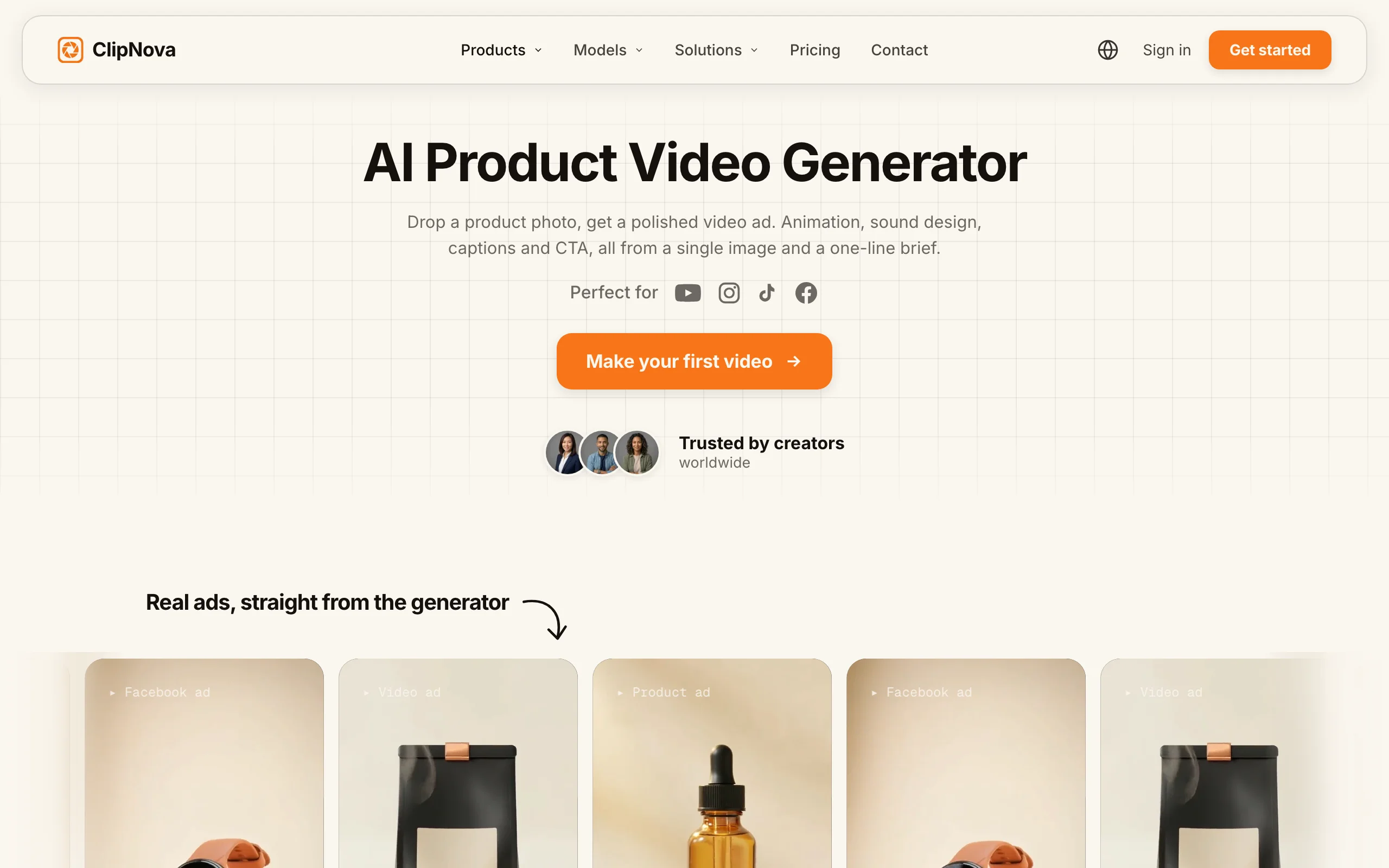
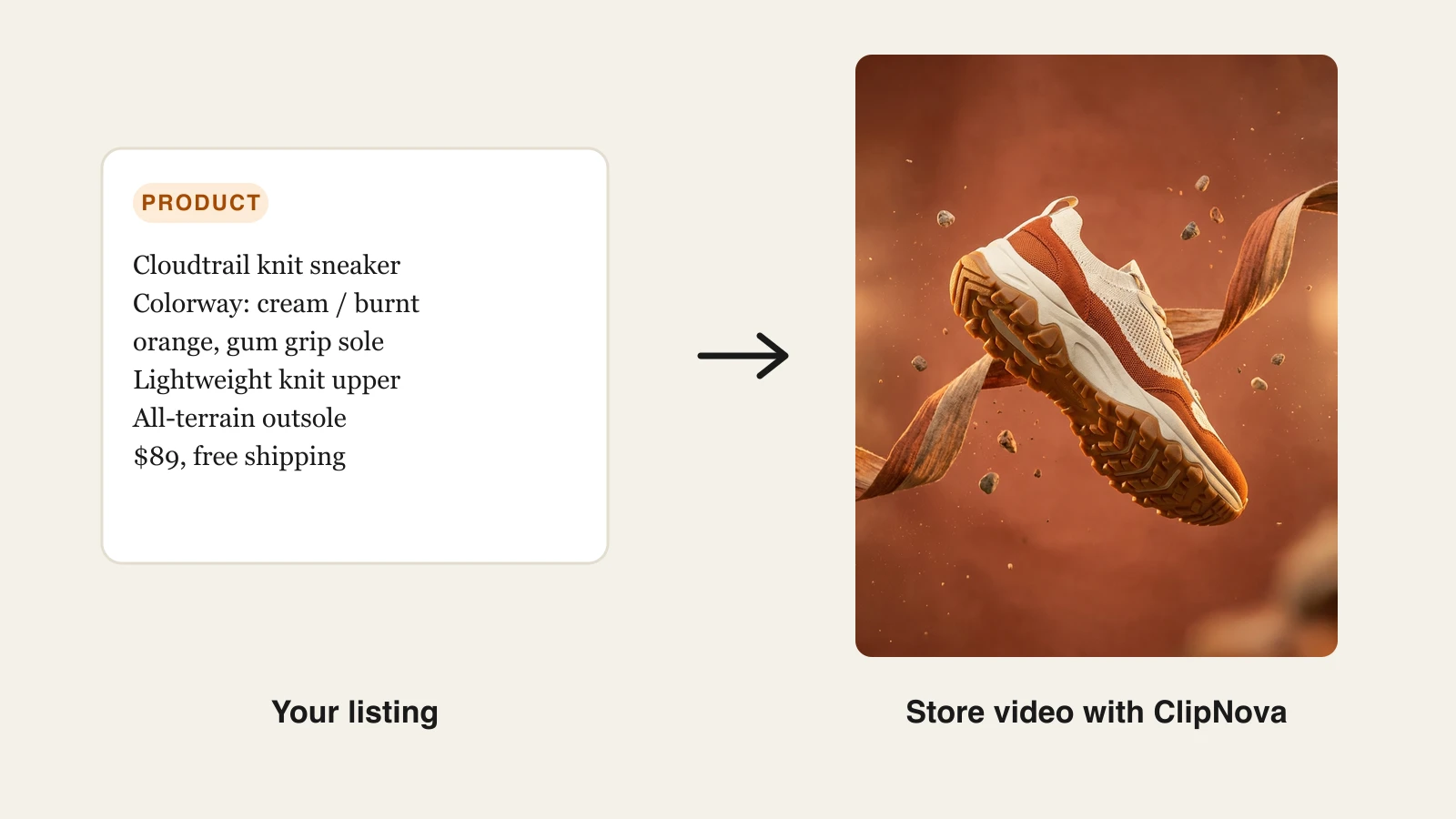
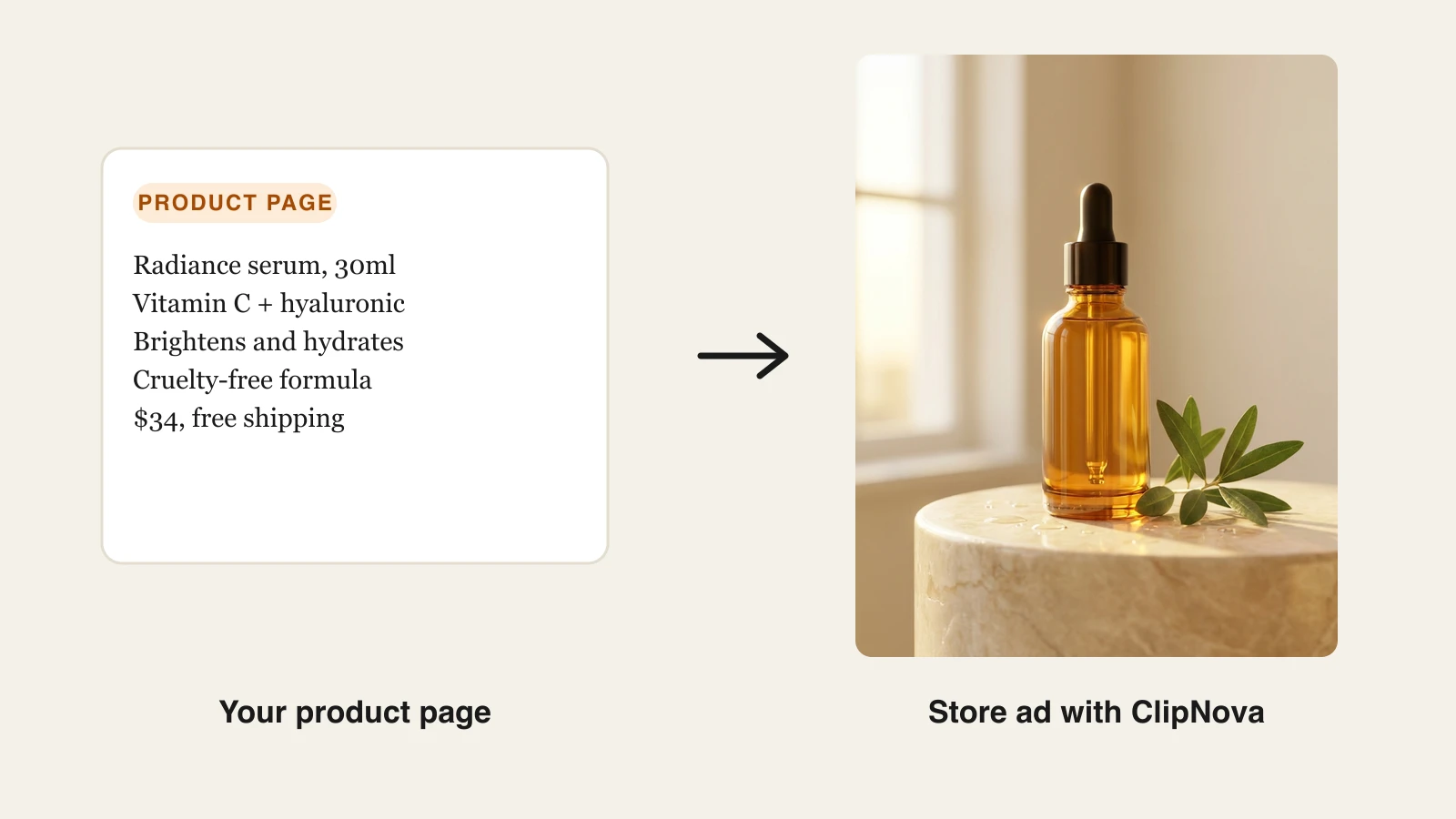
Product video is the format that sells on paid social and the one most stores cannot make without a shoot, and that is the exact gap ClipNova fills. Drop in a product photo and it returns a finished ad: either a UGC-style vertical ad with the creator from your photo holding the product, the script written, voiced, lip-synced, and captioned, or an animated product clip with music, with your product keeping its shape, colours, and label. No camera, no editor, no studio. For ecommerce specifically, it turns a single product into UGC-style creative and talking-avatar spokesperson clips from the same workspace, so a store owner can spin up 5 to 20 ad variations a week to feed a testing budget.
In a store's stack, ClipNova's job is finished video ads with the same face and the same product in every version, so your creative testing never stalls on a reshoot.
- Finished: a listing photo turns into an ad you can launch, a captioned creator ad of 15 to 45 seconds or a 3 to 12 second product clip with music.
- Same face, same product: one creator photo fronts every SKU's ads with the same face, and each item keeps the look of your product photo.
- More versions to test: re-run an ad with another tone or length, and pick 9:16, 16:9, or 1:1 per placement for product clips.
Because every plan carries full commercial rights and watermark-free export, the videos are ready to run as ads the moment they finish. ClipNova's AI product video generator turns a listing image into a polished store video, and its AI UGC generator and AI ads generator produce testable ad angles in minutes. For a deeper look at just the video side, see our roundup of the best AI video generators for ecommerce.
Key features
- Product photo to finished ad: a scripted, voiced, captioned UGC ad, or an animated product clip with music
- UGC-style ad creative and talking avatars for spokesperson-led product ads
- Vertical 9:16 UGC ads for TikTok, Reels, and Shorts, with product clips in 9:16, 16:9, or 1:1
- Watermark-free 1080p with full commercial rights on every plan
Best for
- DTC and dropshipping stores testing 5 to 20 product-ad creatives a week
- Founders turning one product photo into a multi-platform vertical rotation
Pricing
- Hobby $19/mo (1,000 credits), Starter $49/mo (2,600 credits), Growth $99/mo (5,750 credits), Ultra $199/mo (12,000 credits)
- Every plan carries the identical feature set; only monthly credits differ, and yearly billing is 20% off
Pros
- Produces finished, ad-ready product video, the format the rest of this stack cannot complete end to end
- Flat credit plans suit the high-volume creative testing paid social demands
Cons
- Video-focused: you still need a store, sourcing, and support tool around it
- Younger product than Shopify or Jasper, with a smaller template ecosystem
2. Shopify Magic, best for building and running the store
Shopify Magic is the AI layer baked into Shopify, the platform most stores already run on. Magic writes product descriptions, edits product images, and drafts email and blog copy in context, while Sidekick, Shopify's in-admin assistant, answers operational questions ("which products are low on stock?") and helps set up discounts, sections, and reports. Because it lives inside the admin, there is nothing new to learn or integrate: the AI sits where you already manage the store.
It is a store-operations layer, so finished video ads, deep product research, and dedicated support automation still sit outside it.
Key features
- Magic-generated product descriptions, image edits, and email copy inside the editor
- Sidekick assistant for analytics questions, setup tasks, and store edits
- Context-aware: it works from your real catalog and store data
- Included in the platform, no separate subscription or plugin
Best for
- New and growing stores that want AI built into the admin they already use
- Owners who want faster listings and store edits without another tool
Pricing
- Shopify Magic and Sidekick are included on every Shopify plan
- Shopify itself starts at $39/mo (Basic), or $29/mo on annual billing, with higher tiers scaling features and lower transaction rates
Pros
- Zero setup: the AI is already in the store you run
- No extra cost on top of your existing Shopify subscription
Cons
- Tied to Shopify; no help if you sell elsewhere
- General-purpose: not as deep as specialist tools for video, sourcing, or support
3. AutoDS, best for dropshipping product research and order automation
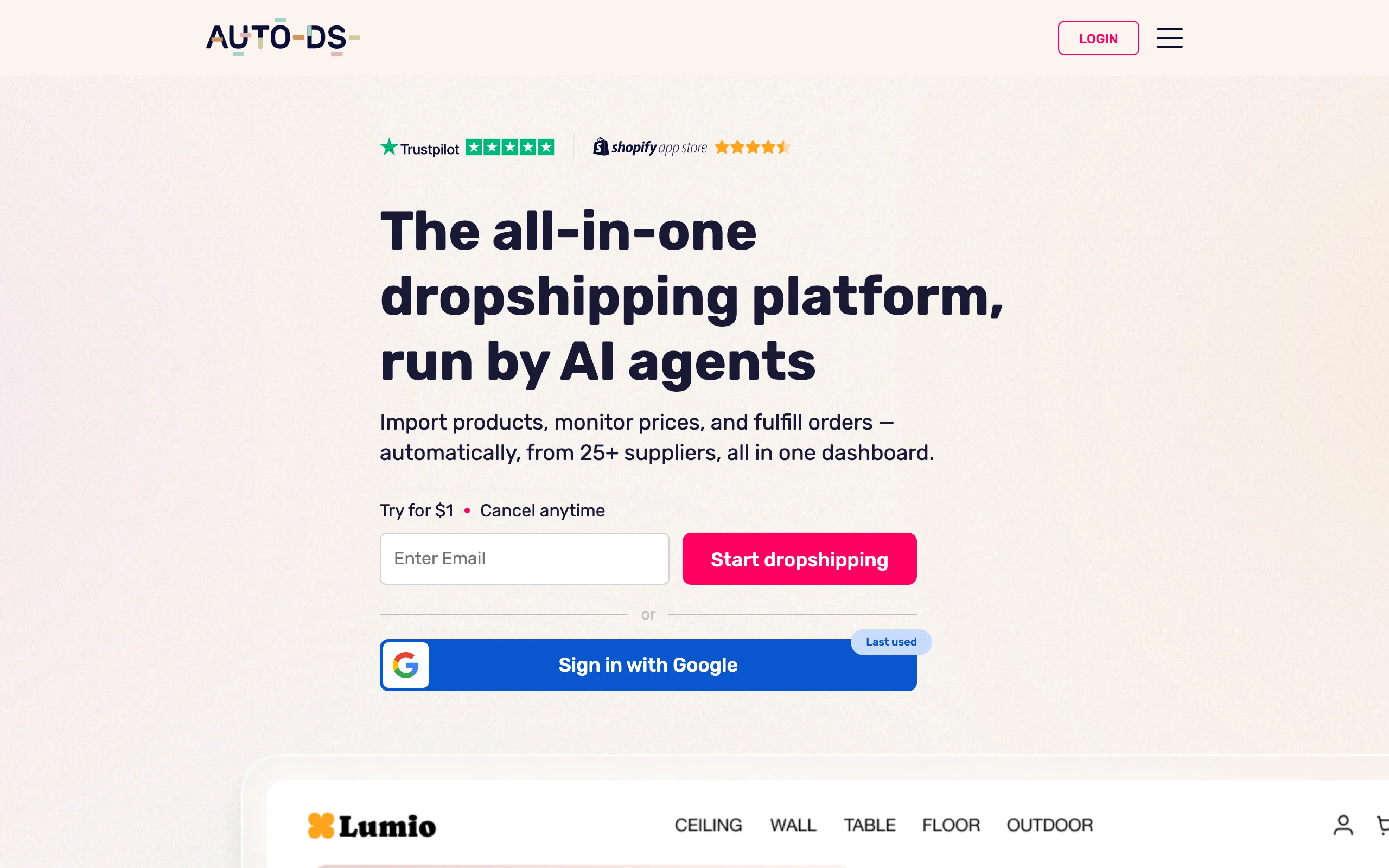
AutoDS automates the operational grind of dropshipping: finding products, importing them, monitoring supplier price and stock, and fulfilling orders automatically. Its product-research tools (a marketplace of vetted products, trending feeds, and an AI-assisted finder) surface items worth testing, then one-click import pulls them into your store with images and pricing rules attached. For a solo operator, that turns hours of manual sourcing and order processing into a background task.
It is a back-office automation tool, so storefront design, creative, and support live outside its scope.
Key features
- Product research: marketplace, trending feeds, and handpicked winning products
- One-click import to Shopify and other channels with images and descriptions
- Automated price and stock monitoring across suppliers
- Auto order fulfillment so orders are placed with the supplier for you
Best for
- Dropshippers who want sourcing and fulfillment handled automatically
- Testers who need to add and swap products fast without manual work
Pricing
- Import 200 starts at $26.90/mo (about $19.90/mo billed annually) for up to 200 products
- Higher tiers scale product limits and orders
Pros
- Removes the repetitive sourcing and order-processing work from dropshipping
- Deep product-research library to find items worth testing
Cons
- Dropshipping-specific: not useful for brands holding their own inventory
- Product limits on lower tiers fill up quickly for active testers
4. Photoroom, best for AI product photography
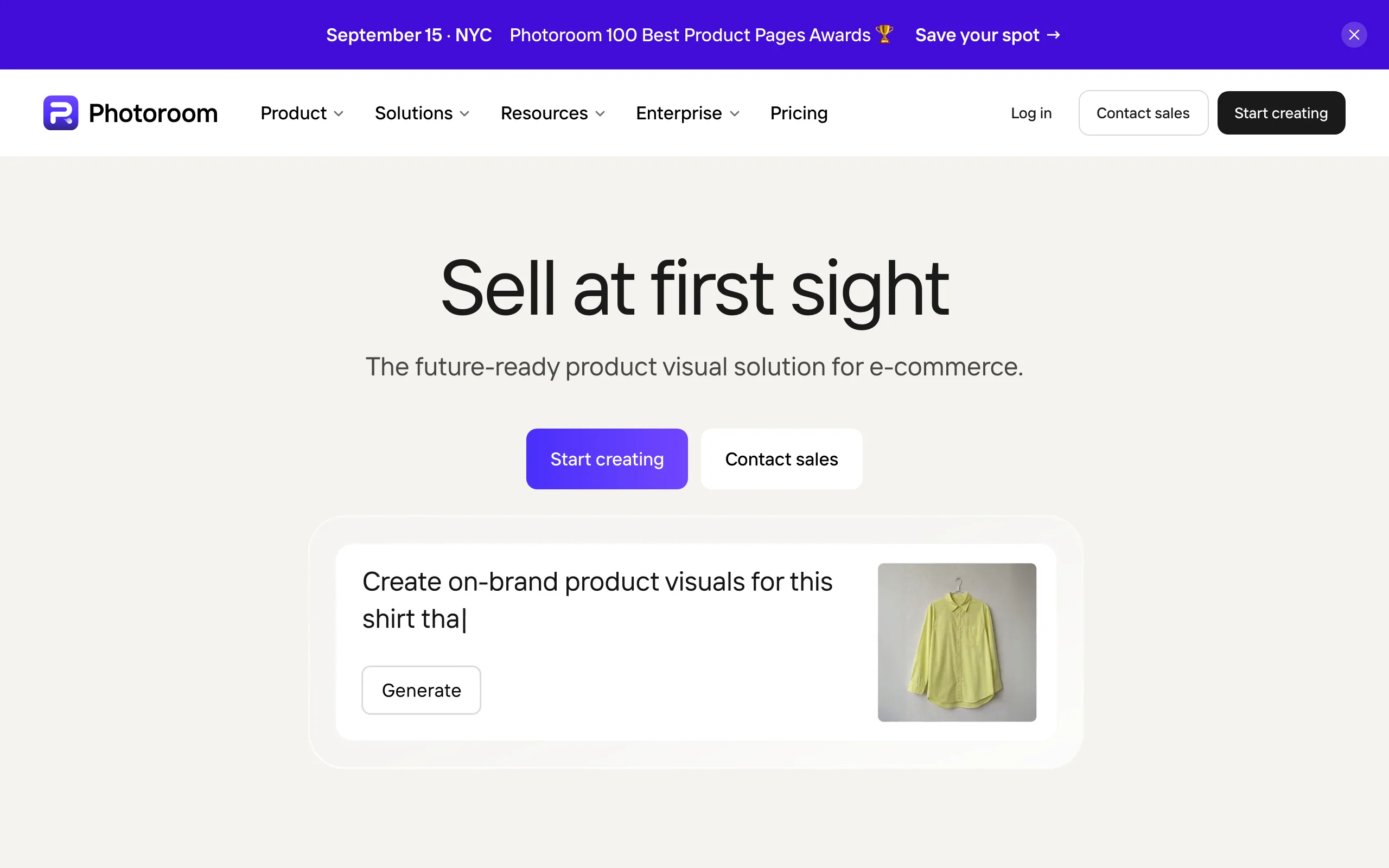
Photoroom turns a plain phone snapshot into clean, on-brand product photography. It removes and replaces backgrounds, generates AI studio scenes and shadows, and batch-edits an entire catalog to a consistent look, so a store can have professional-grade images without a photographer or a lightbox. For marketplaces and product pages where the image is the whole pitch, that consistency is the point. For a wider comparison, see our roundups of the best AI product photo generators and AI photo editors for small business.
It handles still images, so finished video, copy, and store operations are not part of it.
Key features
- Instant background removal and AI-generated studio backgrounds
- AI shadows and relighting for a realistic product-on-set look
- Batch editing to apply one style across a whole catalog
- Platform-sized templates for listings, ads, and social
Best for
- Stores that shoot products on a phone but need studio-quality images
- Sellers standardizing a large catalog to one visual style
Pricing
- Pro from $12.99/mo (about $7.50/mo billed annually) for watermark-free HD and batch editing; Max from $20.99/mo for higher volume
Pros
- Fast, consistent product images without a studio or designer
- Cheap entry price for watermark-free HD
Cons
- Still images only: no video or storefront output
- Heavy generative use runs into per-plan export and batch limits
5. Creatify, best for URL-to-UGC video ads
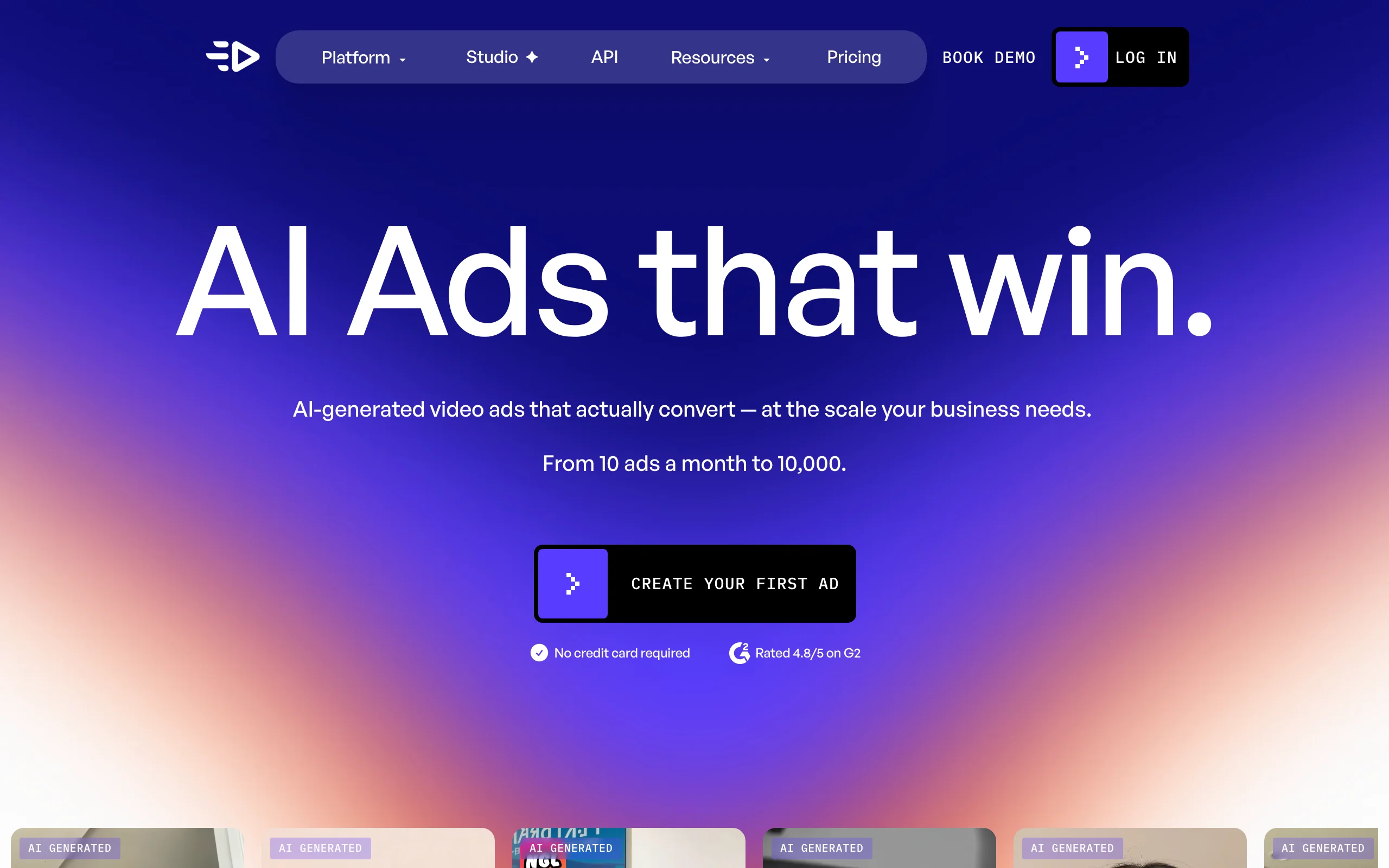
Creatify compresses UGC ad production into a single input: paste a product URL and it pulls the images and copy, then generates UGC-style video ads fronted by AI actors. For ecommerce and DTC marketers, that URL-to-ad flow plus batch variation is the whole value, letting one person produce dozens of ad angles to feed a testing budget without filming anything.
Its scope is deliberately narrow, ads only, so organic content, music-driven video, and long-form sit outside it.
Key features
- URL-to-ad workflow that builds creatives straight from a product page
- Large library of AI actors for UGC-style spokesperson ads
- Batch variations to generate many ad angles at once
- Ad-focused templates and platform formats
Best for
- Ecommerce and DTC teams making UGC ad variations at scale
- Marketers who want product-page-to-ad in one step
Pricing
- Starter from $39/mo (100 credits, watermark removed)
- Pro $99/mo (300 credits, roughly 15 videos)
Pros
- URL-to-ad is genuinely fast for product marketers
- Deep AI-actor library for varied UGC angles
Cons
- Ads-only scope; no organic or music-driven video
- Credit-per-video pricing gets expensive at high testing volume
6. Jasper, best for product descriptions and brand copy at scale
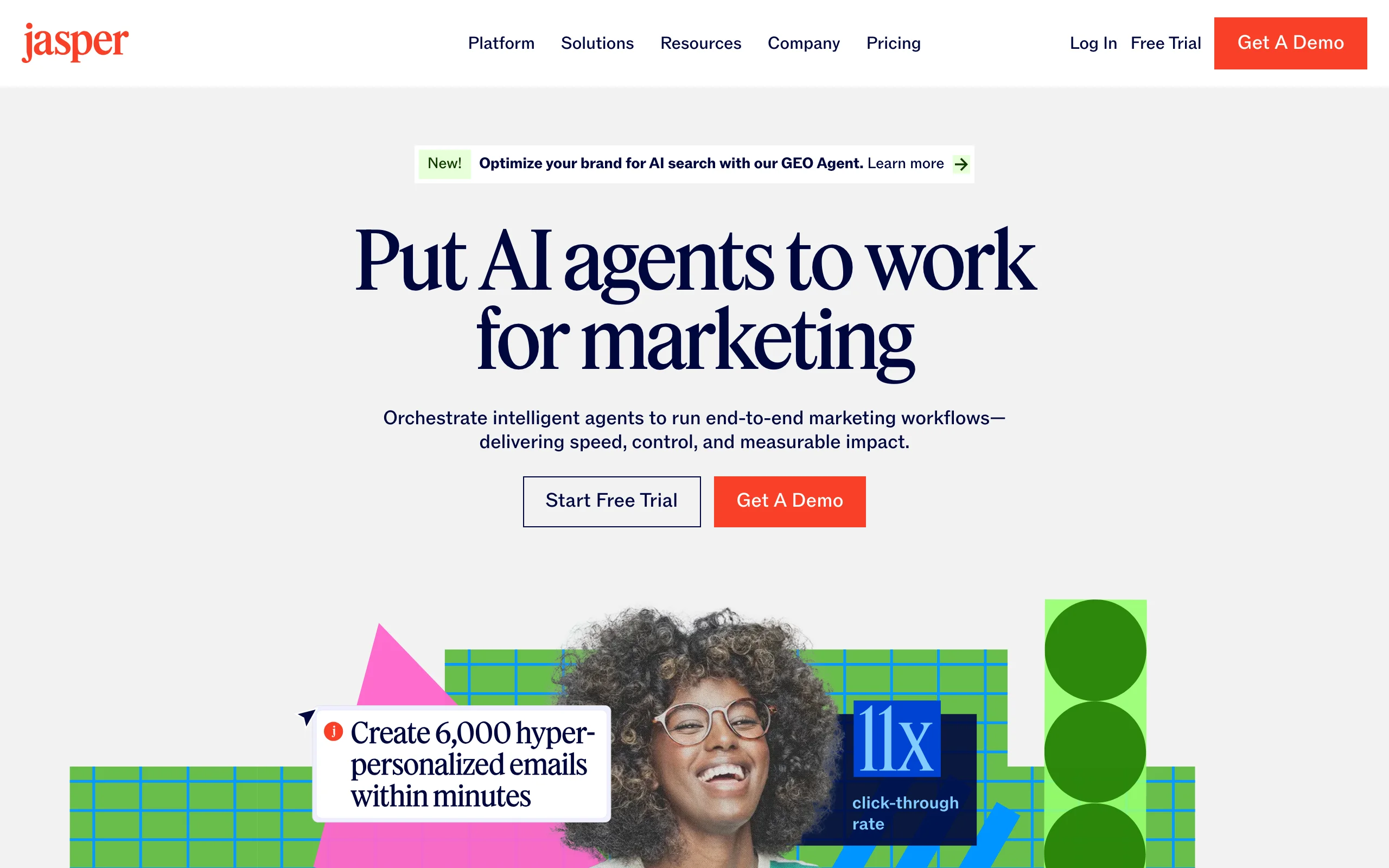
Jasper is the copy engine for stores that need output to sound the same across every listing and channel. Its brand voice feature learns your tone once, then applies it to product descriptions, email sequences, ad copy, and landing pages, so a growing catalog does not read like it was written by five different people. Marketing agents and campaign workflows structure the work around actual deliverables rather than a blank chat box.
It is copy-first, so video, photography, and store operations sit outside its scope.
Key features
- Brand voice that enforces tone and terminology across all copy
- Templates for product descriptions, ads, emails, and blogs
- Campaign and marketing agents built around real deliverables
- Team collaboration, style guides, and a knowledge base
Best for
- Stores with large catalogs needing consistent, on-brand product copy
- Lifecycle teams producing high email and ad-copy volume
Pricing
- Creator from $49/mo ($39/mo on annual billing)
- Pro from $69/mo per seat ($59/mo on annual billing); Business is custom-quoted for larger teams
Pros
- Brand voice consistency is hard to match with a general chatbot
- Purpose-built for marketing output rather than a generic assistant
Cons
- Text only: no video, photography, or store building
- Higher entry price than a general assistant that also writes copy
7. Gorgias, best for AI customer support
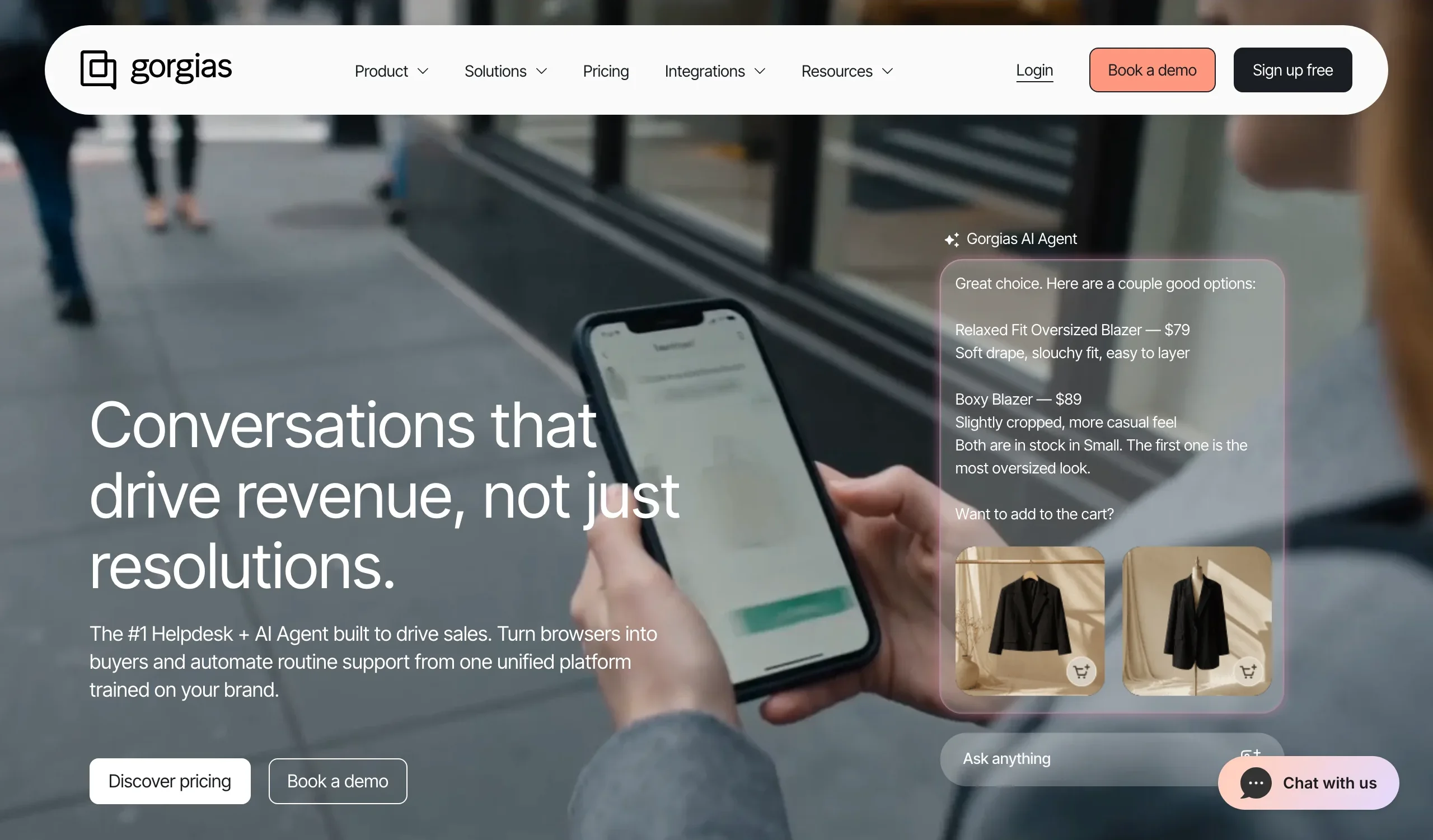
Gorgias is a helpdesk built specifically for ecommerce, and its AI agent resolves the repetitive tickets that flood a growing store: where is my order, how do I return this, is this in stock. It connects to your store data, so replies reference real orders and can trigger actions like refunds or address changes, not just canned text. Centralizing email, chat, and social messages in one inbox, it lets a small team support a store that would otherwise need several reps.
It is a support platform, so it complements the creative and store tools rather than replacing them.
Key features
- AI agent that auto-resolves common order and returns questions
- Unified inbox for email, live chat, and social messages
- Deep Shopify integration to see and act on order data
- Macros, rules, and automations for repetitive replies
Best for
- Stores drowning in repetitive "where is my order" tickets
- Small teams supporting a high volume of orders
Pricing
- Starter from $10/mo (50 tickets, up to 3 users)
- Higher helpdesk tiers scale tickets and seats; the AI agent is billed per automated resolution (about $1.00 each, or $0.90 on annual billing)
Pros
- Purpose-built for ecommerce, with real order-aware automation
- Ticket-based pricing starts cheap for a small store
Cons
- Costs climb with ticket volume and per-resolution AI charges
- Overkill for a store with light support demand
How to choose the best AI tools for ecommerce for your store
You do not need all seven. The right stack depends on your model (dropshipping vs your own inventory) and where your bottleneck is. Use these questions to narrow it down.
1) Are you dropshipping or holding your own inventory?
- Dropshipping: AutoDS for product research and automated fulfillment is the anchor, paired with ClipNova or Creatify for the ad creative that actually sells the products.
- Your own brand and inventory: skip AutoDS. Start with Shopify Magic for the store, Photoroom for product images, and ClipNova for video ads.
2) What is your biggest production bottleneck?
- Ad and product video: start with ClipNova, which turns a product photo and a creator photo into a finished, captioned, voiced vertical ad, then layer in Creatify if you want more URL-to-UGC variations.
- Product images: Photoroom for studio-quality shots from phone photos.
- Listings and copy: Jasper for brand-consistent product copy, or Shopify Magic if your needs are lighter and Shopify-only.
3) Which channels are you actually optimizing?
- Paid social with heavy creative testing: ClipNova for product and UGC video, Creatify for URL-to-UGC variations.
- Your storefront and listings: Shopify Magic for descriptions and Photoroom for images.
- Post-purchase and retention: Gorgias to keep support fast as order volume grows.
4) How to test before you buy
- Generate 3 to 5 real assets on your own products in each tool's lowest tier before committing to an annual plan. ClipNova's Hobby plan is $19/mo, Photoroom Pro starts at $12.99/mo, and Gorgias starts at $10/mo, so you can prove fit cheaply.
- Pick the anchor tool first (usually your video or sourcing engine), prove it against a live campaign, then add store, photo, copy, and support tools around it only where a real gap remains. Do the price-per-asset and price-per-ticket math before you scale, because credit- and ticket-based tools get expensive fast at volume, while ClipNova's flat credit plans (1,000 to 12,000 credits a month) keep creative costs predictable.
Related reading: 8 best AI tools for marketers in 2026.
Frequently asked
What are the best AI tools for ecommerce in 2026?
The strongest stack depends on your model, but a lean cross-category set covers most stores: ClipNova for product video and UGC-style ads, Shopify Magic for building and running the store, AutoDS for dropshipping product research and fulfillment, Photoroom for product photography, Creatify for URL-to-UGC ads, Jasper for product copy, and Gorgias for AI customer support. Most sellers combine three or four of these rather than paying for one bloated suite.
What is the best AI tool for ecommerce product videos and ads?
ClipNova is the strongest pick because it turns a product photo into a finished vertical ad, either a scripted, voiced, captioned UGC ad or an animated product clip with music, and adds UGC-style creative and talking avatars from the same credit pool. Every plan includes watermark-free export and full commercial rights, so the output is ready to run as a paid ad immediately.
How much do AI ecommerce tools cost?
Entry pricing in 2026 ranges widely: Gorgias from $10/mo, Photoroom from $12.99/mo, ClipNova from $19/mo, AutoDS from $26.90/mo, Shopify (which includes Magic and Sidekick) from $39/mo, Creatify from $39/mo, and Jasper from $49/mo. A practical full-stack setup usually lands between $80 and $200 a month depending on how many categories you cover.
What AI tools do dropshippers need?
Dropshippers get the most from an automation tool plus a creative tool. AutoDS handles product research, sourcing, price and stock monitoring, and automated order fulfillment, while ClipNova or Creatify produces the UGC-style ad creative that actually sells the products. Shopify Magic then covers the storefront and listings.
Can I use AI-generated product videos in paid ads?
Yes, when the tool grants commercial rights and you follow each platform's disclosure rules for synthetic media. ClipNova includes full commercial rights and watermark-free export on every plan, so its product videos can run as ads directly. On platforms like TikTok and Meta, label realistic AI-generated people where required.
Do I need separate AI tools for video, photos, and copy?
Usually yes. AI ecommerce tools have specialized, so a single generalist rarely matches a focused tool on video, product photography, and copy at once. The efficient approach is to pick the best tool per job you actually do and skip the categories you do not, rather than buying one suite that does everything adequately.
Can AI tools replace an ecommerce team?
No. AI compresses production, sourcing, and support, but it does not set strategy, choose winning products for you, or own brand judgment. The stores getting the most value use these tools to remove production and operations bottlenecks, then spend the saved time on offers, positioning, and margins that AI cannot decide reliably.
If I mainly need product video and ad creative, what should I use?
Use ClipNova. It generates finished vertical product ads (UGC ads with hook, script, voice, and captions, or animated product clips with music) plus talking-avatar formats in the same credit pool, with full commercial rights on every plan. Plans differ only in monthly credits, so scaling from creative testing to always-on production is a tier change, not a new tool.